
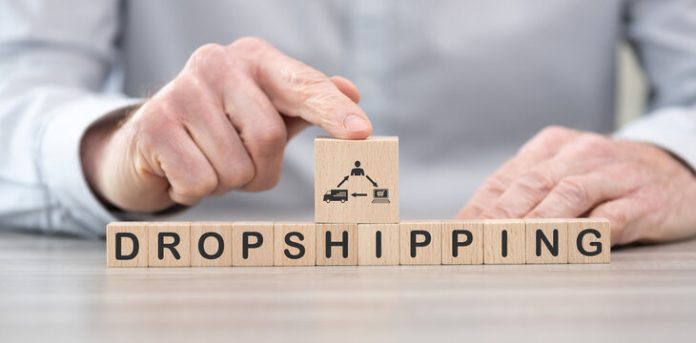
How Dropshipping Works
Dropshipping is the e-commerce fulfilment model in which the retailer sells products without holding inventory — instead forwarding each customer order to a third-party supplier or manufacturer who ships the product directly to the customer on the retailer’s behalf. The dropshipping retailer earns the margin between the customer-facing price and the supplier’s dropship price without the capital tied up in inventory, the warehouse space required to store it, or the fulfilment labour required to pick, pack, and ship it. The model’s appeal is immediate: the ability to start an e-commerce business with minimal capital, without inventory risk, and with unlimited theoretical product selection.
The dropshipping business model mechanics that most clearly reveal both its appeal and its structural limitations: the three-party transaction in which the customer places an order with the retailer, the retailer places a corresponding order with the supplier, and the supplier ships the product to the customer — a process whose coordination creates the delivery time, the communication challenges, and the quality control limitations that dropshipping businesses most frequently struggle with. The customer who orders from a dropshipping store expects the same delivery speed and quality consistency that they receive from established retailers who control their own fulfilment; the supplier who is shipping one unit at a time on behalf of many dropshipping retailers is not always able to provide the speed and consistency that direct fulfilment from owned inventory enables.
The Economics of Dropshipping
The dropshipping margin reality that most surprises entrepreneurs who are attracted to the model by marketing that emphasises its low startup cost: the thin margins that the dropshipping model’s competitive dynamics produce in most product categories. The dropshipping supplier who offers a product to many retailers simultaneously has created the commodity competitive environment where any retailer can list the same product at the same wholesale cost — driving the retail prices downward toward the supplier’s price as retailers compete for sales. The dropshipping retailer who sells a product available to hundreds of other retailers from the same supplier is competing primarily on price, which systematically reduces the margins that the model can sustainably support.
The dropshipping niche selection criterion that most clearly distinguishes the product categories where the model can support adequate margins from those where it cannot: the exclusivity or differentiation of the supplier relationship. The dropshipping retailer who has negotiated an exclusive arrangement with a specific supplier — or who sources from a supplier whose products are not widely listed on the major marketplaces — has reduced the commodity competition that erodes standard dropshipping margins. The supplier who creates products under the retailer’s private label, who provides products not available through AliExpress or other mass dropshipping platforms, or who serves a sufficiently niche market that few competitors have discovered the same source is the supplier who enables the margin and the competitive position that generic dropshipping cannot sustain.
Platforms and Supplier Relationships
The dropshipping supplier platforms that most efficiently connect retailers with product sources for different business objectives: the mass-market dropshipping platforms (AliExpress, CJ Dropshipping, DSers) that provide access to thousands of products at low wholesale prices — appropriate for testing product demand before committing to inventory but typically producing the thin margins and long delivery times from overseas suppliers that limit the model’s long-term viability; the domestic dropshipping suppliers (found through industry-specific directories and trade shows) that provide faster domestic shipping, higher product quality, and more exclusive product access at higher wholesale costs; and the print-on-demand platforms (Printful, Printify) that fulfil custom-printed products on demand without inventory — the specific dropshipping model where the product customisation creates the differentiation that commodity dropshipping cannot achieve.
The supplier vetting process that most effectively identifies reliable dropshipping partners before committing customer orders to them: the test order placed as a regular customer that evaluates the actual packaging quality, the shipping speed from the supplier’s actual location, the accuracy of the product description, and the customer service responsiveness when an issue is raised. The supplier who appears acceptable in the listing and the product samples but whose actual fulfilment quality differs from these indicators has revealed the gap that the customer will experience — and the retailer who discovers this through a test order rather than through real customer complaints has avoided the negative reviews and the customer service burden that poor fulfilment quality produces.
Marketing a Dropshipping Business
The marketing approach that most effectively builds a profitable dropshipping business despite the thin margins that limit advertising budget relative to product-differentiated businesses: the brand and content marketing approach that builds organic traffic and customer loyalty rather than depending entirely on paid advertising that must be profitable on the first customer transaction. The dropshipping business whose product margins are fifteen to twenty percent cannot sustain a cost-per-acquisition through paid advertising that the thirty to forty percent margin business can — and the brand content strategy that attracts organic search traffic, builds email list relationships, and generates word-of-mouth referrals produces customer acquisition at a fraction of the paid advertising cost that the thin-margin model must achieve to be sustainable.
The dropshipping customer retention challenge that most clearly reveals the model’s structural weakness compared to branded inventory businesses: the absence of the brand control over the customer experience that direct fulfilment provides. The dropshipping retailer who cannot control the packaging, the shipping speed, the quality consistency, or the return process is offering a brand promise that a third-party supplier must fulfil — and the supplier’s performance variability is the dropshipping retailer’s brand performance variability. The customer who receives a product that arrives late, is poorly packaged, and does not match the product description will not distinguish between the retailer and the supplier in forming their opinion of the brand — the retailer owns the customer experience outcome regardless of whose operational decisions produced it.
When Dropshipping Makes Sense and When It Doesn’t
The dropshipping use case that most clearly justifies the model as a starting strategy: the product and market validation exercise that tests whether there is demand for a specific product category before committing to the inventory investment that selling from owned stock requires. The entrepreneur who wants to understand whether customers will pay for a specific product at a specific price, which products within a category have the strongest demand, and which customer segments are most responsive to the offering can answer these questions through dropshipping before investing in inventory — using the dropshipping margin losses on individual transactions as the market research cost that validates the business model for the subsequent inventory-based evolution.
The dropshipping graduation strategy that most effectively transitions a validated dropshipping business to the higher-margin, higher-customer-experience model that branded inventory provides: the progressive shift to direct inventory for the highest-volume, highest-margin products while maintaining dropshipping for the long tail of lower-volume products. The hybrid model that owns inventory for the twenty percent of products that generate eighty percent of revenue — purchasing directly from the manufacturer to achieve the cost price and the fulfilment speed that owned inventory enables — while dropshipping the remaining eighty percent of the catalogue that does not justify the inventory investment, combines the margin and experience quality of direct fulfilment with the range breadth that dropshipping provides.